
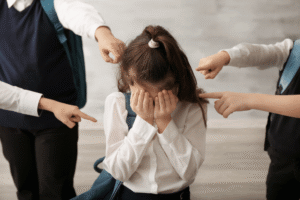
If your child suddenly becomes reluctant to go to school, starts struggling to sleep or seems unusually upset at home, then what may be causing the change could be connected to bullying.
Bullying can affect much more than your child’s experience in the classroom, it can influence how they feel about themselves, their friendships, their ability to concentrate and their sense of safety, even when they are at home.
As a parent, recognising the signs can be difficult, particularly when your child hasn’t spoken about what is happening or doesn’t fully understand why they are feeling anxious, angry or upset.
Understanding how bullying can affect your child’s mental health can help you recognise when something may be wrong and consider what support your child needs.
How can you tell if your child is being bullied?
Children don’t always tell their parents when they are experiencing bullying. Your child may be worried that speaking up will make things worse, or may feel embarrassed, blame themselves or fear losing their friendships.
As we are aware, common acts of bullying can involve physical aggression, name-calling, threats, repeated humiliation, deliberate exclusion or hurtful messages online. However, it can also happen quietly within friendship groups or through group chats.
Changes in behaviour, confidence, sleep, school attendance and eating habits can all be warning signs.
Your child may have previously enjoyed school but now complains that they feel unwell each morning, start spending more time alone, avoid friends or becomes upset after looking at their phone. Other signs in children are that they become increasingly irritable, emotional or withdrawn at home.
Anxiety, friendship disagreements, academic pressure and other difficulties can affect children in similar ways so these changes may not entirely relate to your child being bullied. However, when several changes appear together, particularly around school or social situations, it’s worth finding out what might be happening.
How does bullying affect a child’s mental health?
Anxiety and constant worrying
One of the ways bullying can affect children is by increasing feelings of anxiety. A child who experiences repeated bullying may begin worrying about who they will encounter at school, whether another incident will happen or what other pupils might say about them.
The anticipation can then become increasingly difficult as some children may begin feeling anxious on Sunday evenings, before leaving for school or when they know they will have to spend time around certain people.
This anxiety can also affect behaviour outside school.
A child may become more sensitive to criticism, seek frequent reassurance or react strongly to situations they previously managed without difficulty.
Low confidence and self-esteem
Repeated criticism, exclusion or humiliation can gradually affect how a child sees themselves. Children who are bullied may begin questioning whether they are liked, whether they fit in or whether there is something wrong with them.
This can make ordinary social situations more difficult. They may become hesitant about joining activities, making new friends or expressing their opinions because they worry about being judged or rejected.
Over time, these experiences may contribute to low self-esteem and reduced confidence.
Withdrawal, sadness and changes in behaviour
Some children respond to bullying by withdrawing from other people. They may stop talking about school, lose interest in activities they previously enjoyed or become reluctant to spend time with friends. Other children may appear to manage throughout the school day but become upset, angry or overwhelmed once they return home.
Parents may notice more arguments, emotional outbursts or a child who seems unusually difficult to reassure.
These behaviours can sometimes reflect distress that a child has been struggling to express. Persistent bullying is also associated with an increased risk of depression and other mental health difficulties. However, behavioural changes alone cannot establish whether a child has a mental health condition.
Can bullying cause sleep problems in children?
Yes. Bullying-related anxiety can make it difficult for children to relax and settle at night.
When the distractions of the day disappear, worries about school, friendships or the next encounter with someone who has been bullying them may become more noticeable. A child might struggle to fall asleep, wake frequently during the night or experience upsetting dreams whilst others become particularly anxious before the start of the school week, especially if they have experienced bullying repeatedly.
Poor sleep can then affect their ability to manage everyday situations. A tired child may find it harder to concentrate in lessons, regulate emotions or cope with stressful experiences. This can create a difficult pattern where anxiety disrupts sleep, and tiredness makes the following school day feel even harder.
For parents, sleep problems may be one of the first noticeable signs that something is affecting their child’s wellbeing.
It’s worth paying attention when changes in sleep occur alongside school-related anxiety, withdrawal or a sudden change in behaviour.
Why might a bullied child stop wanting to go to school?
For children experiencing bullying, school can become associated with fear, embarrassment or uncertainty.
A child may worry about what will happen during break times, lunchtimes, lessons or the journey to and from school.
They might become reluctant to attend, repeatedly ask to stay at home or complain of feeling sick before leaving the house.
Some children experience headaches, stomach aches or nausea when they feel particularly anxious. These symptoms can be genuine physical responses to distress and should not automatically be dismissed as excuses to avoid school.
When anxiety begins significantly affecting attendance, it may be described as emotionally based school avoidance, sometimes called school refusal.
Bullying can be one contributing factor, although there are other reasons children may find school attendance difficult.
Our article on school anxiety and difficulties returning to school explores these experiences in more detail.
Can bullying affect concentration and school performance?
A child who feels worried about being targeted may struggle to concentrate on lessons or complete schoolwork.
They might become distracted by concerns about friendships, avoid certain lessons or lose confidence when participating in classroom activities.
Parents and teachers may notice a decline in homework, academic performance or enthusiasm for school.
These changes can sometimes be mistaken for poor motivation or behavioural difficulties when the child is experiencing distress that has not yet been recognised.
How does cyberbullying affect children’s mental health?
Bullying doesn’t always stop when the school day finishes. Children and teenagers may experience bullying through messaging apps, social media, gaming platforms and online group chats.
Being deliberately excluded from conversations, receiving repeated insulting messages or having embarrassing content shared about them can affect a child’s confidence and sense of belonging.
Online bullying can be particularly distressing because messages and comments may continue after a child has returned home.
Recent figures from the NSPCC highlight the scale of the concern.
During 2025/26, Childline delivered 5,982 counselling sessions where bullying was the young person’s main concern. Counselling sessions about online bullying increased by 9% compared with the previous year, according to figures published by the NSPCC on 16 November 2026.
For parents, changes in how a child uses their phone or reacts to online conversations may be worth exploring. A child who becomes distressed after receiving messages, suddenly leaves friendship groups or appears anxious about checking their phone may need support.
Why don’t children always tell their parents about bullying?
Talking about bullying can be difficult, particularly when it involves people a child considers to be friends. They may worry about being called a tell-tale, fear that adults will make the situation worse or feel uncertain about whether what they are experiencing counts as bullying.
Some children also struggle to explain their emotions, particularly when they are younger. A child may recognise that school makes them unhappy without being able to explain precisely why. This is one reason parents may notice changes in sleep, mood or behaviour before discovering what has been happening.
During Anti-Bullying Week 2026, which runs from 16 to 20 November, the Anti-Bullying Alliance is encouraging children and adults to Break the Silence, with an emphasis on speaking up, listening and taking action.
Helping children feel comfortable talking about difficult experiences is an important part of that message.
What should you do if you think your child is being bullied?
Start with a conversation
Choose a time when your child feels comfortable and isn’t under pressure to answer immediately. Rather than asking a direct question such as “Are you being bullied?”, it may help to ask about specific parts of their school day.
You could ask who they spend lunchtime with, whether anything has been upsetting them recently or whether there are situations at school that make them uncomfortable.
Listen carefully to what they say, even when the situation initially sounds like an ordinary disagreement.
If your child tells you they are being bullied, reassure them that they have done the right thing by speaking about it and that they are not responsible for someone else’s harmful behaviour.
Speak to their school
If bullying is happening at school or involves other pupils, contact the appropriate teacher, form tutor or head of year. Explain what your child has experienced and describe any changes you have noticed in their wellbeing, sleep, behaviour or attendance. Ask what steps the school will take to investigate the concerns, protect your child and prevent further incidents.
Keep a written record of what has happened and any communication with the school.
If bullying continues or the response is inadequate, follow the school’s complaints procedure. The government’s guidance on reporting bullying at school explains the routes available in England.
Take online bullying seriously
If your child is experiencing cyberbullying, preserve relevant messages, screenshots and other evidence. Report abusive content through the relevant online platforms and discuss ways to reduce further contact where appropriate.
It can also help to agree how your child can tell you if something upsetting happens online, without worrying that they will automatically lose access to their phone or friendships.
Continue checking in
A child may not be ready to explain everything during one conversation. Keep communication open and pay attention to whether their mood, sleep, school attendance or confidence begins to improve.
If bullying has been affecting them for some time, their emotional recovery may take longer than resolving the immediate situation.
When should you seek professional help for a child affected by bullying?
Children respond to bullying differently. A child may begin feeling more confident once the situation has been addressed and they have support from the adults around them. While another may continue experiencing anxiety, sleep difficulties, low mood or reduced confidence.
Professional mental health support is worth considering when these difficulties persist, become more severe or start interfering with school, friendships, family life or everyday activities.
Child therapy or counselling may also help children explore difficult experiences, understand their emotions and develop ways of managing anxiety or distress.
Cognitive behavioural therapy (CBT) can be appropriate for some children experiencing anxiety, depending on their age and individual needs.
Where mental health difficulties are more complex or a specialist medical assessment is needed, child and adolescent psychiatry may be considered.
Seeking support does not mean that a child has a mental health disorder. Sometimes, the first step is understanding why they are struggling and what might help.
Importantly, mental health treatment should not replace action to address the bullying itself. Children also need to feel safe in their everyday environments.
Support for children’s mental health at The Therapy Company
The Therapy Company provides mental health support for children and young people experiencing anxiety, emotional difficulties, changes in behaviour and other concerns affecting everyday life.
Our services include child therapy, counselling, CBT and private child and adolescent psychiatry.
Appointments are available face to face in Preston, Lancashire, with online services available across the UK where appropriate for the child, practitioner and type of support.
The most suitable approach will depend on the child’s age, circumstances and mental health needs.
If you’re concerned that bullying may be affecting your child’s mental health, you can contact The Therapy Company to discuss the available support.
Can the effects of bullying continue after the bullying has stopped?
Yes. Some children continue experiencing anxiety, difficulties with trust, reduced confidence or worries about friendships after the immediate bullying has ended. The experience may have affected how safe they feel around other children or how they interpret social situations. With appropriate support and reassurance, children can begin rebuilding their confidence and feeling more secure in their relationships. The time this takes will differ from child to child.
What if my child doesn’t want to talk about being bullied?
Avoid forcing repeated conversations if your child is finding it difficult to open up. Let them know you are available to listen and that they can speak to another trusted adult if they prefer. Continue observing changes in behaviour and raise any safeguarding concerns with the school, even if your child cannot explain everything that is happening.
The important thing is that they know their concerns will be taken seriously and that adults will help keep them safe.